Let butterflies inspire you
Discover what Ameland's butterfly species can teach you – stories, symbolism and inspiration for each species
Every butterfly species has something to teach you
You can learn something from every butterfly species. Ellen Mosterman-Weijmans has delved into the characteristics of the species our apartments are named after. The texts can be found in each apartment next to a picture of the butterfly. Below you can read the stories written so far.
Atalanta
The Atalanta, also known as the Red Admiral, is a common migratory butterfly that can be found all over the Netherlands. The butterfly mostly occurs in groups. A typical trait of the male is patrolling from late afternoon to early evening to guard its territory and chase off other animals, including rival males. They take a dominant stance and can sometimes be quite bold, but at least they know exactly what they want. They let the warm rising air carry them to great heights so they can survey everything… Atalanta is also the name from Greek mythology of a young woman who wanted to prove that women could be heroes too, and that this was not reserved for men alone. She was known for her speed, physical strength and hunting skills. Just like the Red Admiral, which also likes to play the hero every now and then…
Where do you find your fighting spirit? How do you stand up for yourself and your ‘territory’? (Or could you sometimes use a little boldness?). There is a hero in you too!
Heroic – physical strength – speed – self-confidence – fighting spirit –
Argusvlinder
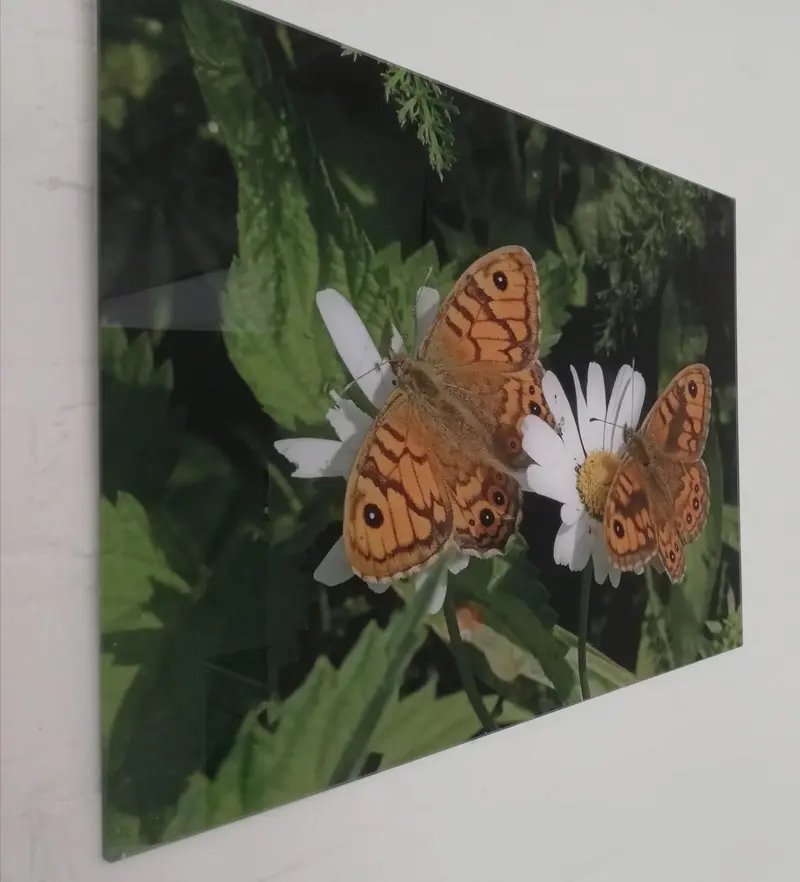
The beautiful orange Argusvlinder, with black eyespots on its wings, used to be a common butterfly throughout the Netherlands, but its numbers are falling sharply for reasons still unknown. Last year it briefly seemed to have died out on Ameland, but then, fortunately, a number of them suddenly turned up again along the foredunes.
The Argusvlinder loves warm, sunny grasslands and can be found near stones and wooden fences or dams. It is a special butterfly that owes its name to the eyespots on its wings. It is named after the giant ‘Argus’ from Greek mythology, who had 100 eyes all over his body. Even when he went to sleep he kept 2 eyes open, because he always wanted to stay alert. In Greek mythology, Argus stands for ‘he who sees everything’. The ‘Argus eyes’ on the wings of the orange butterfly serve to frighten off its natural enemies. This way it seems as if nothing escapes this butterfly.
Are you sometimes afraid that things will escape you? You can't always be on your guard, even if you have 100 eyes on your back. Sometimes it is enough to have trust, and to give your ‘Argus eyes’ a rest now and then, so that afterwards they can look at the world with a refreshed gaze.
Do you come across an Argusvlinder on your path? Perhaps it is asking you for a little extra attentiveness?
– alertness – trust – not wanting to miss anything – he who sees everything –
Aurelia
This special butterfly owes its name to its irregular wings and its golden appearance (aurelia = gold in Latin), with which she seems to command nothing but allure. She catches your attention with her beauty and her unique jagged outlines.
In what way are you unique? Which of your qualities set you apart from others?
You will mainly find the jagged Aurelia in the shrubbery near open spaces such as in a forest, park or garden. She loves having room to fly out, alongside her sheltered and safe hiding place under the bushes and dry leaves. She appears when it is time for you to create your own space in your busy mind.
Find your own open space…
– Uniqueness – individuality – space – self-confidence – strength –
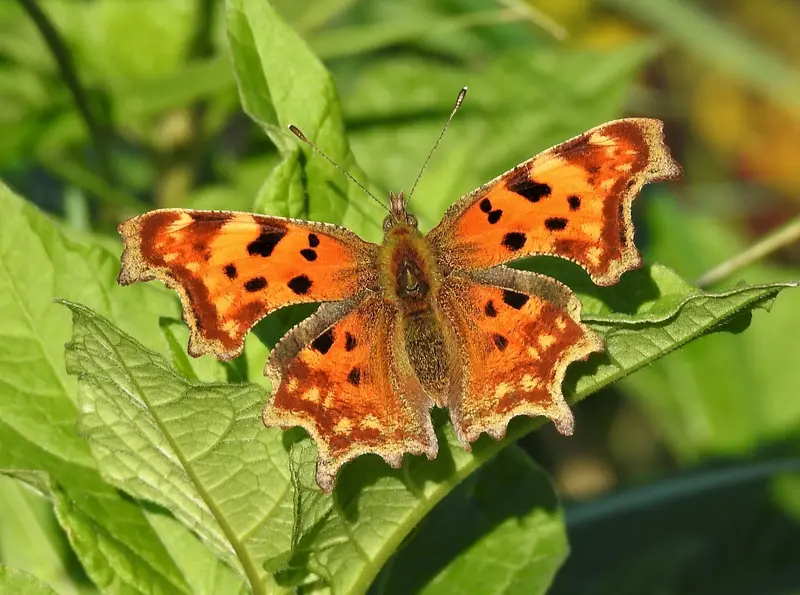
Boomblauwtje
The graceful Holly Blue is small and delicate, but she flies high in the treetops, higher than the average butterfly. She is fast and quick to take flight, and she rises above herself and others, literally and figuratively. So small, yet so brave.
Do you sometimes underestimate yourself? You can do more than you think. Or do you try to do things far too well? Do you set the bar too high?
The Holly Blue only comes down to earth to feed and to lay her eggs on the clinging ivy, then quickly flies back up among the treetops. But she too needs her connection with the earth to reach great heights again, just as you and I do. Enjoying the high peaks, but with both feet on the ground…
Her soft blue colour stands for rest and calm. Perhaps that is exactly what you need. It doesn't always have to be fast and lofty. It doesn't always have to be perfect, and saying no isn't always a bad thing. Take your break. Sometimes ‘good’ is simply ‘good’…
– Small but brave – great heights – perfectionism – rest and calm –
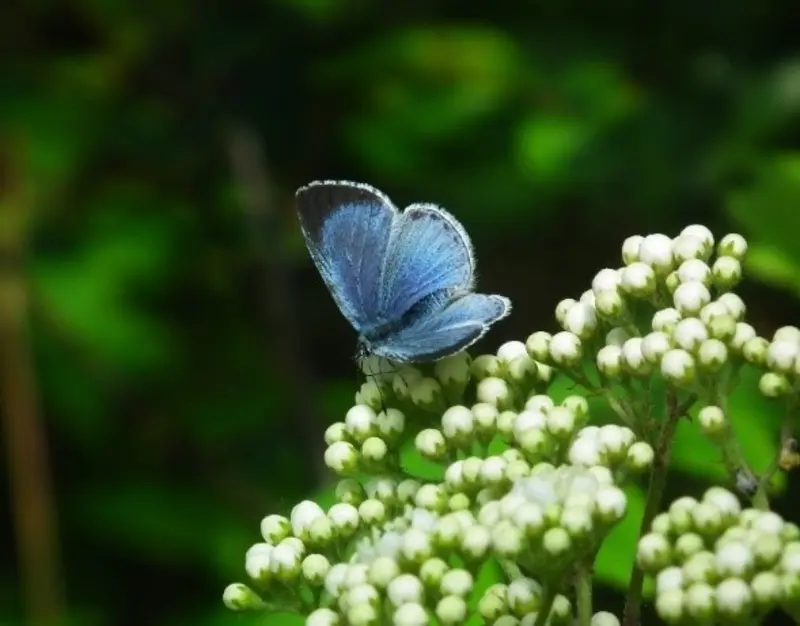
Dagpauwoog
The colourful and well-known Dagpauwoog (peacock butterfly) owes its Dutch name to its day-active way of life and the typical eyespot on its wings, just as the peacock wears one on its tail feathers. The Dagpauwoog thus symbolises the pride and beauty of a peacock, with which it brings colour to its day. Unlike some other butterfly species, the Dagpauwoog has no real preference for a habitat and calmly lets the wind carry it towards new worlds. As long as it's sunny and there are enough flowers. What trust, don't you think? It trusts the wind and knows it will all work out.
Do you dare to trust life and where it sometimes takes you?
And what does beauty mean to you? What are you proud of? Look beyond the form and see beauty in everything.
– Pride – beauty – ‘seer’/inner knowing – trust – surrender –
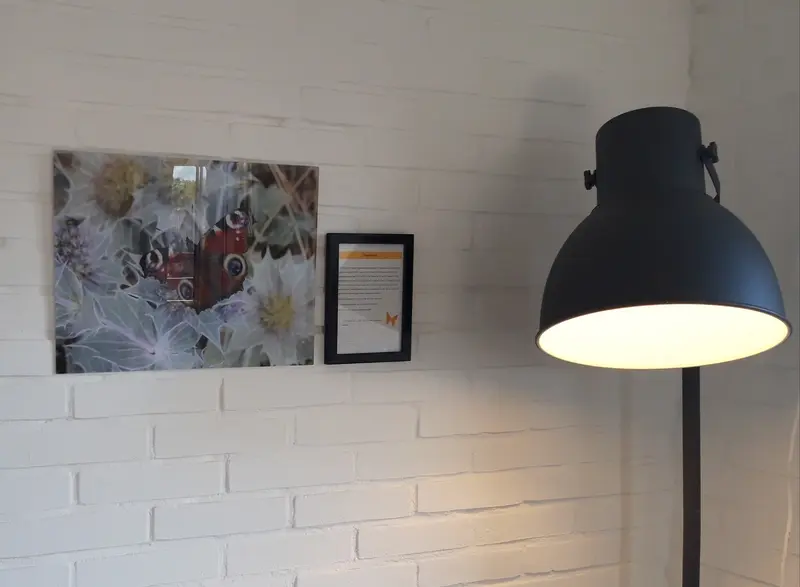
Eikenpage
As its name suggests, the Eikenpage prefers to stay high up in the crowns of large, strong oak trees. What does this say about this simple brown butterfly? The roots of the oak go deeper into the earth than those of its fellow trees, and its wood is hard and strong. An oak stands for steadfastness and perseverance and is not easily ‘knocked over’. The Eikenpage surely loves spending time around the energy of this strong tree.
How strong do you actually feel?
Do you quickly give up when things go wrong, or can you stay standing, unperturbed?
To what extent do you lean on the people around you? And what do you manage on your own strength?
When you come across an Eikenpage, you may realise that you are capable of more than you think. Stand firm, feel your feet on the ground and trust!
– Steadfastness – perseverance – (will)power –
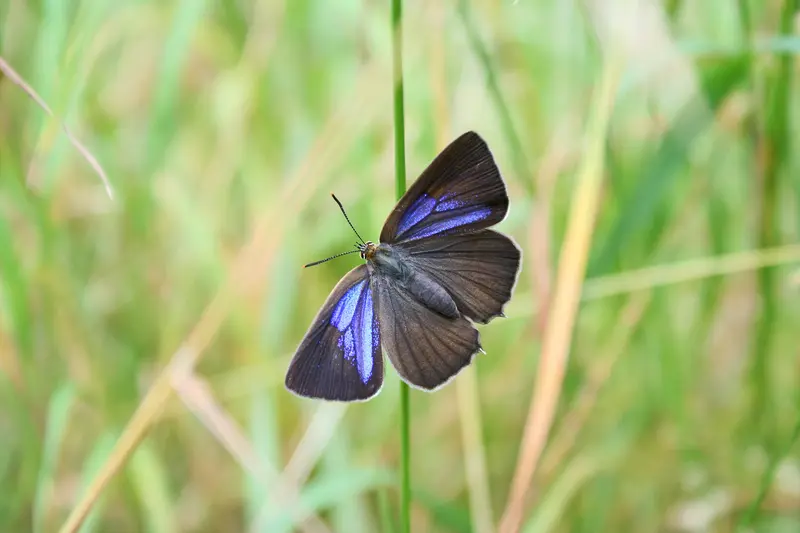
Essenpage
As the name suggests, the Essenpage (ash swallowtail) prefers to stay among the leaves of ash trees in the south of France and Portugal.
What does this preference for the ash say about the Essenpage?
According to old folk mythology, the energy of the ash brings you into contact with your true self, so you can find out what really matters to you in life. In the old days, a girl could take home an ash leaf she had found and put it under her pillow at night. She would then surely dream of her future husband.
What do you find important in life, and do you still live by it?
Do you find it hard to make decisions?
Are you still following your natural course, or is it time for some change?
You will probably never come across the Essenpage on Ameland, but perhaps you can still let it inspire you a little today?
– your own course – inner values – making decisions –
Grote Parelmoer
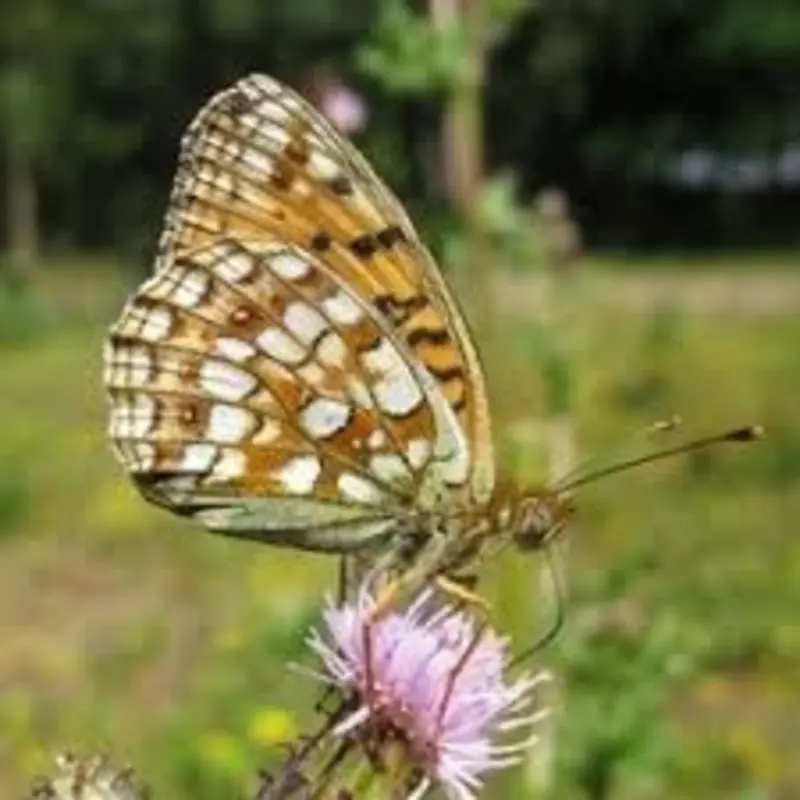
The Dark Green Fritillary is a very rare butterfly that became extinct on Ameland only about ten years ago and is also seen less and less often in the rest of the Netherlands. You can still find it mainly on the high Veluwe and the first three Wadden Islands.
The Dark Green Fritillary is a butterfly that does not tie itself to one place and needs plenty of varied habitat. Some of them are true travellers, covering dozens of kilometres in their butterfly lives.
How much space do you need? Do you need freedom of movement to experience the world, with all its diversity and variety? Isn't life one big adventure?
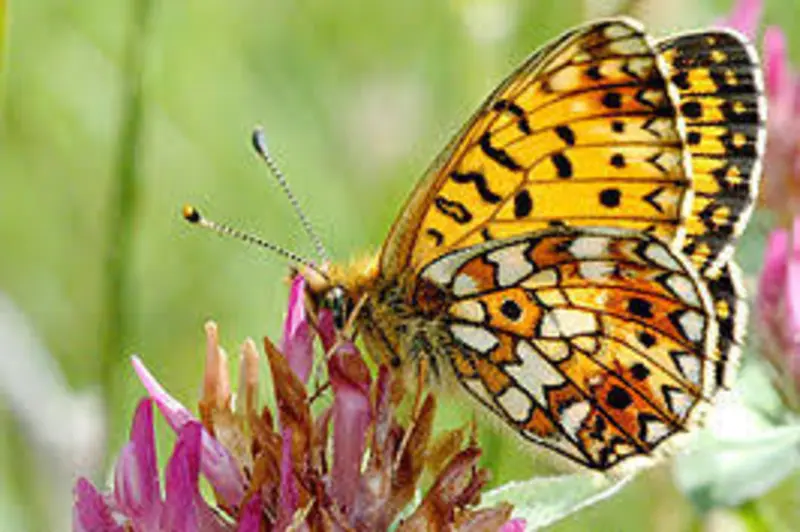
The Dark Green Fritillary is recognisable by its orange wings with black spots and dots. On the underside of the wings you will find the typical and unique mother-of-pearl spots to which the butterfly owes its Dutch name. These butterflies really are little gems to come across…
What makes you unique? And do you give your life enough ‘shine’? Let this rare butterfly inspire you…
– Needing space – freedom – variety – adventure – uniqueness –
Heivlinder
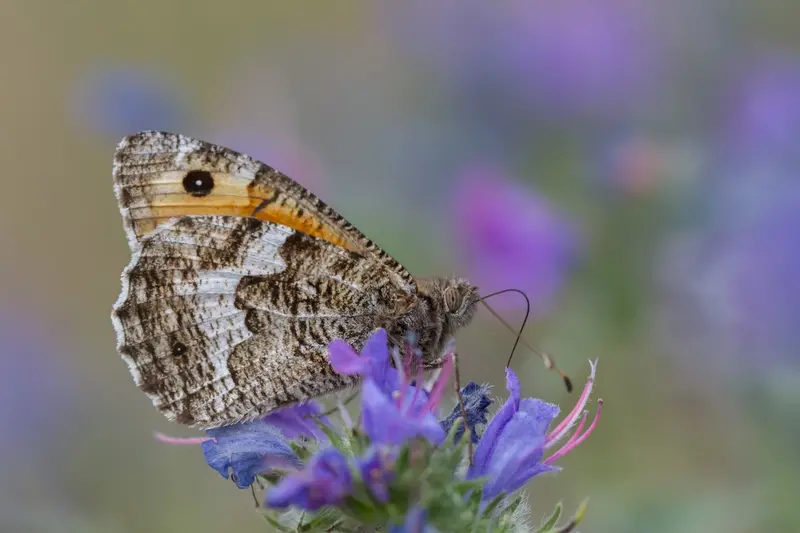
The Heivlinder is a butterfly that is doing poorly nationally, but on Ameland it is still often found in dunes with lots of drifting sand. On the inside of its wings it has a beautiful orange pattern with an ‘eye’ on each wing. Remarkably, it only rarely opens its wings, so you hardly ever see the colours. With its wings closed it is a very inconspicuous grey butterfly that you can barely spot on the warm sand. Even the caterpillars of this butterfly don't like too much attention. During the day they hide deep among the tufts of grass and only come out at night to feed. Do you come across a Heivlinder among the dunes these days? Then you're in luck! What might this butterfly want to tell you?
Do you show your inner ‘colours’ to the world? Or do you prefer to stay inconspicuously in the background?
The colour orange stands for richness and warmth. The eyes on the wings stand for inner ‘seeing’.
Which qualities do you keep hidden under a safe, grey, inconspicuous veil? Take some time these days to reflect on yourself and your qualities. Is it still necessary to keep your wings closed? Or could you show a certain part of yourself, your opinion for example, a little more to the world?
– Inconspicuousness – hidden talents – still waters run deep – wisdom – outer simplicity – inner richness –
Icarusblauwtje
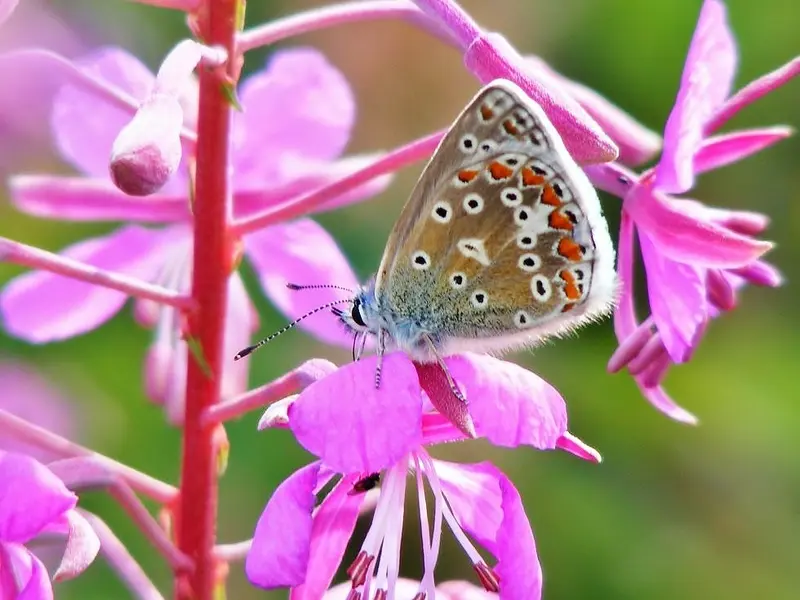
This beautiful butterfly is characterised by its soft blue colour. The colour of the sky and the sea, of innocence, balance and trust. These butterflies often spend the night in small groups in sheltered tufts of grass. Two or three butterflies then sit head-down on a blade of grass. In the early morning and late afternoon they can regularly be seen at these shared resting places.
The Icarusblauwtje (common blue) is named after the winged Greek figure Icarus, who was given wings by his father Daedalus so that he could escape his captivity on Crete. His father warned him not to fly too close to the sun, because the wings, attached with wax, could otherwise melt. Icarus, however, was overconfident and flew higher and higher. Until he did come too close to the sun and his wings melted. He fell into the Aegean Sea and drowned.
In the male Icarusblauwtje the edges of the blue wings are such a delicate white, and in the female they often fade from blue to brown, making it look, just like the Greek Icarus, as if the wings have melted.
Are you sometimes overconfident? The higher you want to climb, the harder you can fall. It's wonderful to feel free, but everything has its limits. Where could you be more careful? Try to find the balance between too high and too low. Too much and too little. Let the people around you be your mirror and find your inner balance…
– freedom – overconfidence – caution – balance – trust – inner balance –
Iepenpage
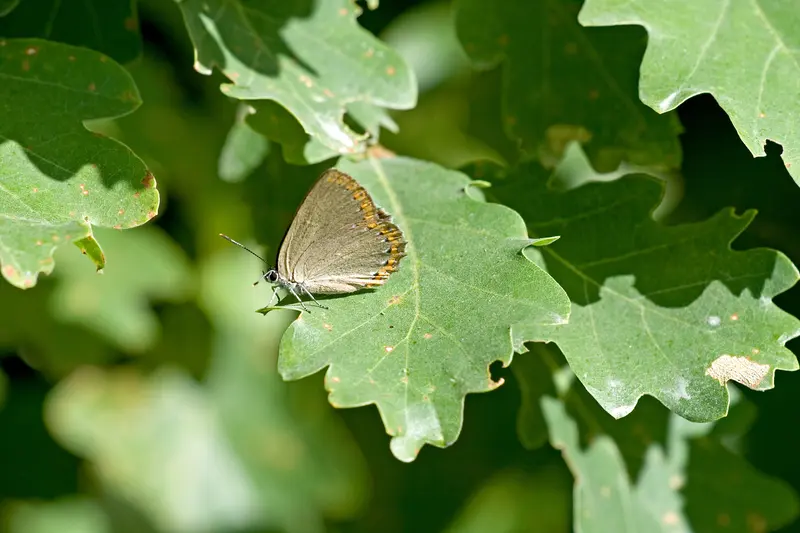
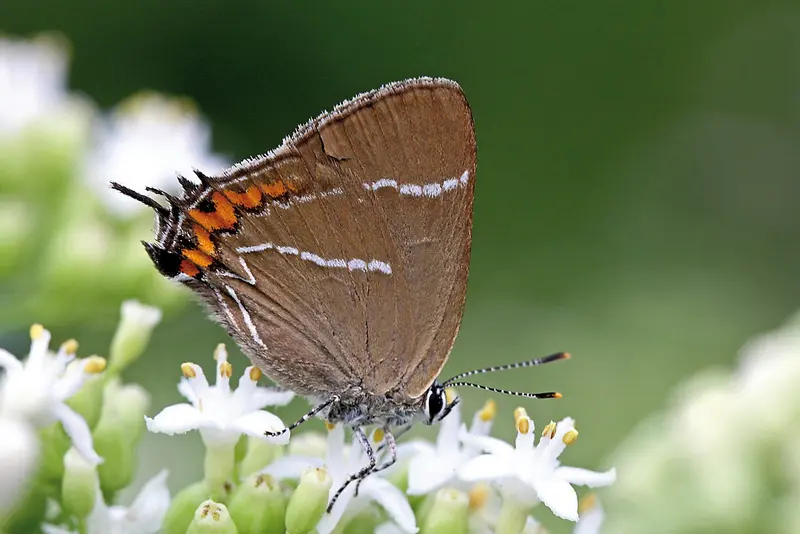
The White-letter Hairstreak is a small butterfly that is easily overlooked because of its hidden way of life high in the crown of the elm tree. In the morning and evening she sometimes comes down to visit the flowers.
In symbolism, the elm also stands for individualism and following your own path. It's lovely that this is reflected in the butterfly's behaviour.
Although White-letter Hairstreaks gather in large numbers, they do not need a large habitat. Some populations are known to have just a single tree at their disposal.
Do you sometimes avoid input from the outside world?
Or could you show a little more of yourself outside your familiar world?
How much living space do you really need to feel good?
And does that match what you have? Would you like to change anything about it?
– on one's own – detachment – content with little –
Kleine Vos
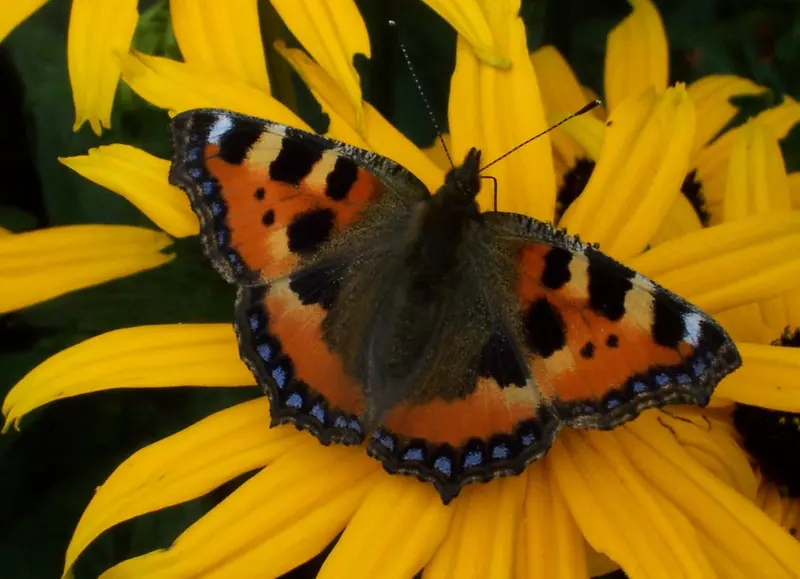
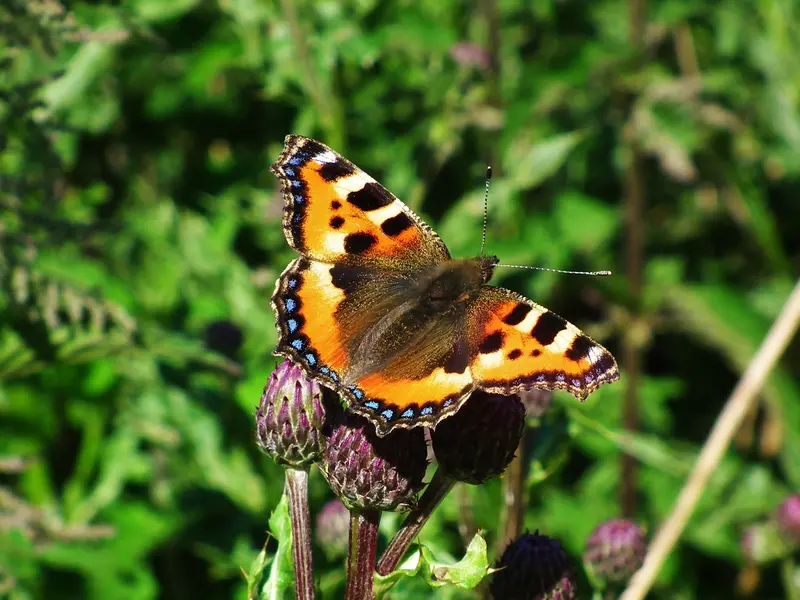
The Kleine Vos is a butterfly that belongs to the family of the Aurelias, or as they are also called on Ameland: ‘the cobblers’, because of the dark underside of their wings.
The butterfly is a mobile species on Ameland; the caterpillars feed on stinging nettles, and within the Netherlands it is also a migrant butterfly that easily crosses the Wadden Sea in suitable weather. In the Netherlands it was hard to find last year because of the dry summers, while the Kleine Vos still flutters about in large numbers, especially in the west of Ameland.
The males love chasing away other males and make a full-time job of it. Even every moving dark shadow is mistaken for a male and chased away. Towards the females, on the other hand, they are very hospitable. As soon as they see a female, they can spend hours trying to make a little impression on her. What angelic patience!
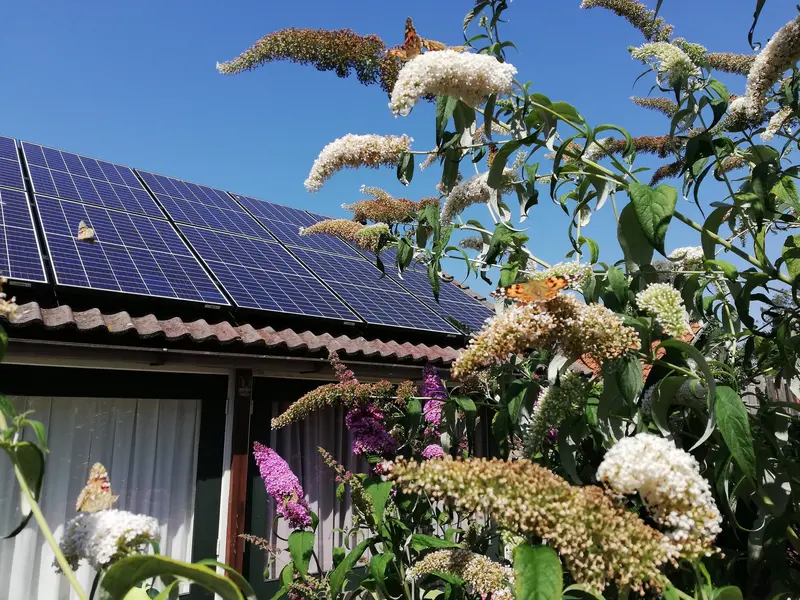
The Kleine Vos can often be seen on Ameland: in summer on the butterfly bushes, in early spring on the winter heath and in autumn on sedum. Unlike many other butterflies, with a little luck you can even come across a Kleine Vos in winter. They hibernate in damp, cool places in trees or empty buildings. They don't let a bit of cold get them down!
What do you go for? Whatever you do, you do with all your attention, and you take your time carefully and patiently. Or could you actually use a few of the Kleine Vos's qualities?
– Patience – perseverance – dedication – taking your time – vitality –
Kommavlinder
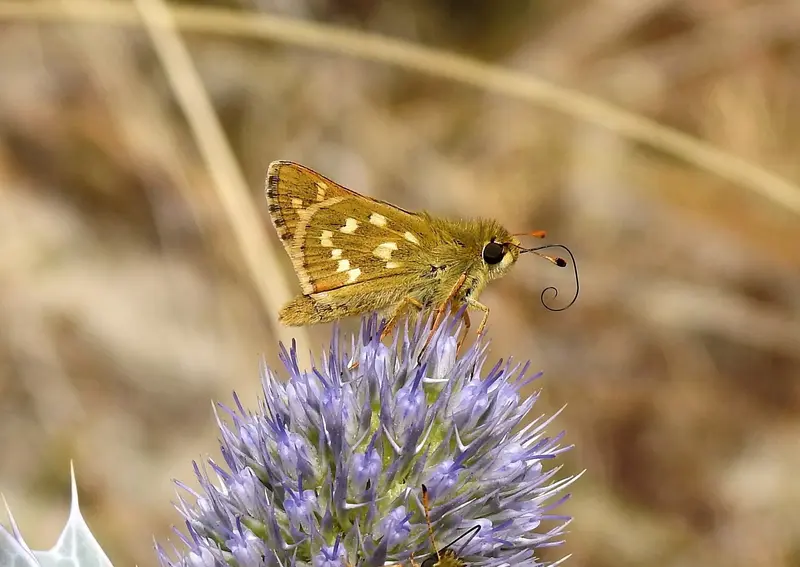
After the Fritillary, the Silver-spotted Skipper is the most special and rare butterfly cherished on Ameland!
The Silver-spotted Skipper thrives on dry, poor open grasslands, dunes and varied heathland. On Ameland you will therefore mostly come across it around the closely grazed heath and dune areas, especially near Hollum and Ballum.
In the Netherlands, however, it is threatened with extinction, largely because the vegetation in the dune areas is becoming overgrown. This is partly due to a decline in the rabbits that graze this area and thereby create a mix of open patches and low vegetation.
This little brown butterfly (belonging to the skipper family) has a beautiful comma-shaped marking on its hindwings. In classical Greek, comma means: pause, moment of rest. Only later was it used for the familiar punctuation mark. Brown is also the colour of the earth, which symbolises stability and grounding.
Do you take a break every now and then? Or is that as rare as the Silver-spotted Skipper population? It is the moment of rest that allows you to recover and to process all the impressions you have gathered. After a pause, new space has been created. You feel stronger and fresher again. Do you allow yourself enough of these moments of rest in your daily activities?
And even on holiday you need a pause now and then. That wonderful ‘break’ that brings you right back to your own ‘zero point’. Perhaps a lovely sauna session or massage is a good start ;)
– Rest – being rare and special – taking a break – stability – being grounded –
Koninginnenpage
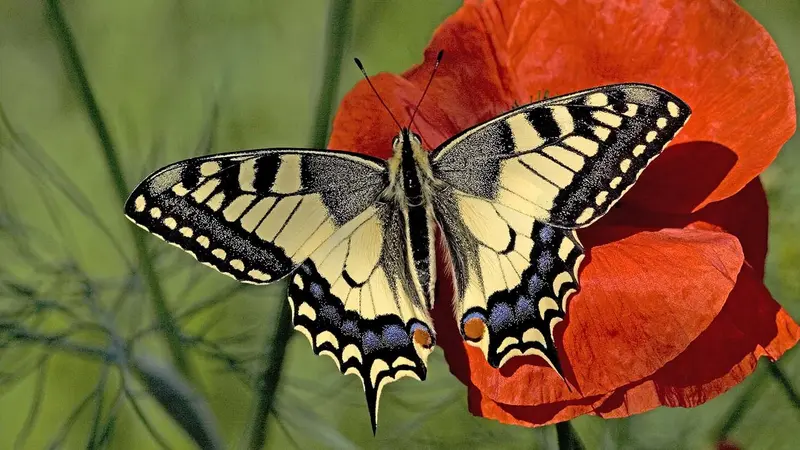
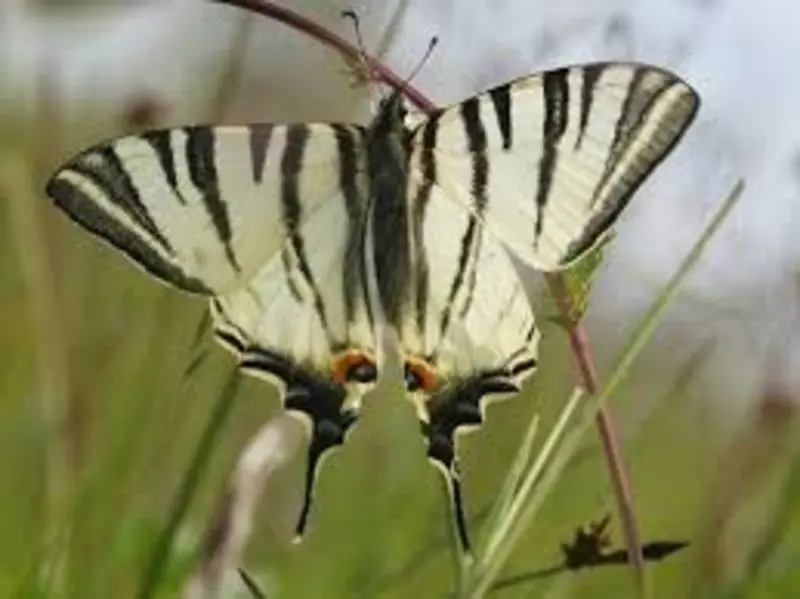
The Koninginnenpage (swallowtail) is one of the most beautiful butterfly species in our country, with wings of 5 to 10 centimetres. A characteristic of the Koninginnenpage is its striking wingbeat, like the flapping sails of a sailing ship. Elegant and dignified like a Queen...
Joseph Conrad made a beautiful comparison with people:
"This splendid butterfly finds a little heap of dirt and sits still on it; but man will never on his heap of mud keep still..."
Do you sometimes feel unsure whether you can face your setbacks?
Or do you effortlessly keep your calm so you stay close to the solutions?
Look back and see how far you have already come. Even the mud heap will give you something in return. Facing your obstacles gives you dignity. Just like the striking black-and-white colour contrast on the wings: no day without night, no light without dark, no victory without effort…
– Dignity – effort – imperturbability – calm – pride –
Koningspage
The Koningspage is an exceptionally beautiful black-and-white butterfly that is rare in the Netherlands. It has a striking wingbeat, like the flapping sails of a sailing ship. It feels most at home in hilly areas and is found mainly in the German Rhine region.
With its name, this butterfly refers to the young 5-year-old pages of the royal family who were trained by the knights to become squires. Once the page had built up enough physical strength and had proven that he was able to fight in battles, he became a squire at the age of 15. A position to be proud of in those days. That is how the Koningspage flies too… Full of pride and allure.
What can you be proud of? What have you already achieved through hard work and great effort?
When the obstacles on your path make you feel unsure, look back and see how far you have already come. Chest out, and move forward full of pride. It gives you dignity. You will brave more than you think. Just as the striking black-and-white colour contrast on the wings of the Koningspage shows: no day without night, no light without darkness, no victory without effort…
– Dignity – effort – perseverance – pride – victory –
Koolwitje
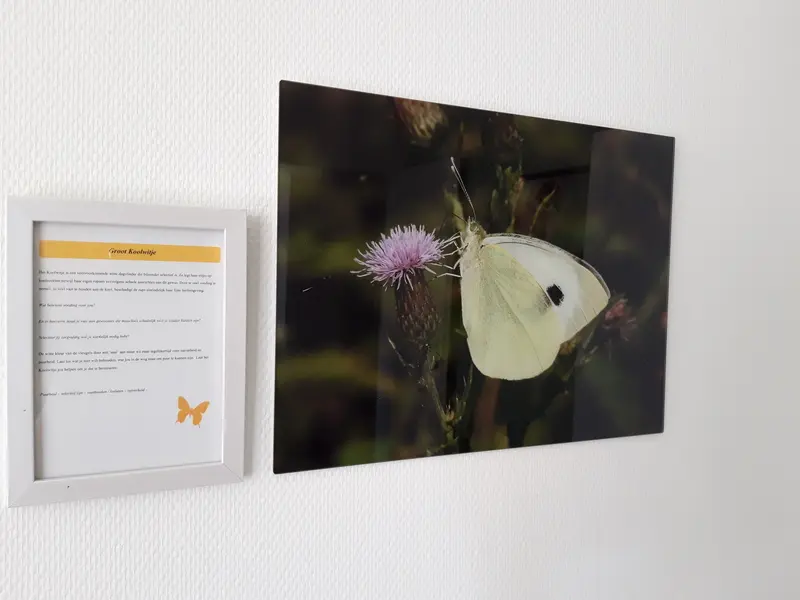
The Koolwitje (cabbage white) is a common white butterfly that is particularly selective. It lays its eggs on cabbage plants, while its own caterpillars then damage this crop. By taking too much food, holding on too tightly to the cabbage, the caterpillar eventually damages its own fine habitat.
What does nourishment mean to you?
And to what extent do you hold on to habits that might be harmful to you?
Do you carefully select what you really need?
The white colour of the wings may seem a little ‘dull’, but at the same time white stands for clarity and purity. Let go of what you don't want to keep, of what stands in the way of you being pure. Let the Koolwitje help you remember that…
– Purity – being selective – holding on / letting go – clarity –
Luzernevlinder
The Clouded Yellow is a fairly scarce migratory butterfly, found mainly in the south of the Netherlands and along the coast. So they are lovely little gifts if you happen to come across one. The Clouded Yellow is not fond of company, so you are more likely to meet them on their own than in groups. They are active and fast fliers and fly off immediately when disturbed. So it is certainly not a butterfly that lets itself be approached easily. They love to rest for a while in open spots among herbs or flower-rich grasslands. Orange Clouded Yellows almost always sit with their wings closed. Unlike other butterflies, they even sunbathe with their wings closed…
Do you also like being on your own? Or could you show yourself and your lovely qualities a little more to the world? Who do you let in, and who not?
Sometimes it also feels really good to withdraw into your own world. That is where you find your calm again…
– happy alone – reserved – selective – sensitive – individuality –
Oranjetipje
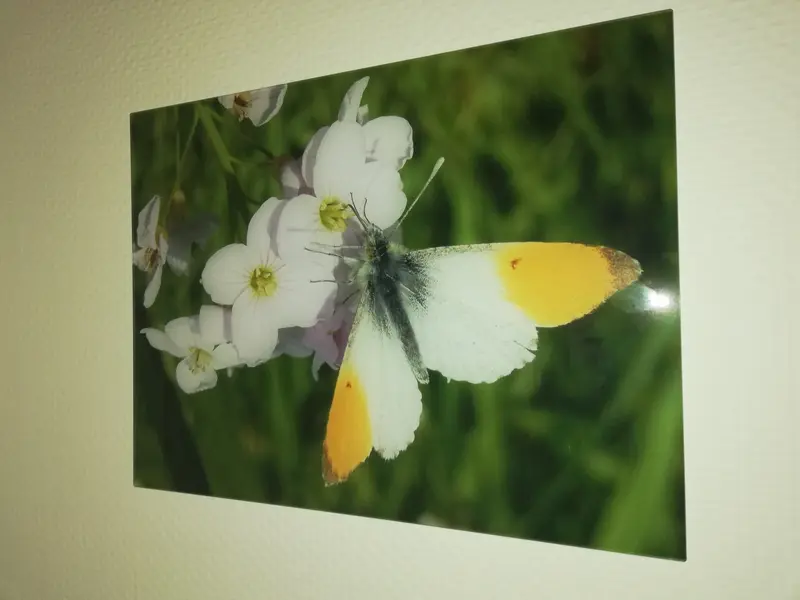
The male Oranjetipje (orange tip) is a spring butterfly with a recognisable orange patch on its wings, which very fittingly can be found around King's Day. The white female is choosy and doesn't just let any male near. If she isn't interested, she quickly settles on a flower, raises her abdomen into the air and beats her wings. Even when laying her egg on the cuckooflower, the egg gives off a scent that keeps other female butterflies away. It's ‘her’ flower! The cuckooflower doesn't provide much food for the caterpillar either, so nature has arranged this beautifully.
What are you choosy about? You know very well what you do and don't want. Or is that something you could learn? Knowing what you want and what you need helps you put down roots. To take responsibility for your place in the world. To be able to say: here I am. This is my place. Here I feel strong!
The males, on the other hand, are less choosy and fly at anything white, even if it's a scrap of paper. What a Casanova, eh, this Oranjetipje.
– Choosy – self-assured – independent – daring to take your place – standing in your power – seizing your chances –
Zilveren Maan
The beautiful Zilveren Maan is a species of fritillary that has died out on Ameland. In the 1970s this butterfly could still be found near Ballum, but then, perhaps after large-scale heath sod-cutting, it died out. In the rest of the Netherlands, too, the population is declining sharply, probably due to the soil drying out. This butterfly prefers damp, nutrient-poor grasslands. A nice detail to know is that water / moisture symbolises both the metal silver and the Moon. And with that also purity, femininity, motherly feeling and a warm heart. In addition, the colour silver stands for magic, dreams and strong intuition. Take a moment to reflect on these themes. What might this butterfly want to tell you?
As a woman, do you give enough attention to your feminine side, or as a man to your emotions? What is your bond with your mother like? Is something needed there? And do you actually trust your intuition? Over the coming days, pay attention to your dreams and what they want to tell you…
When you come across a Zilveren Maan, it is a very special encounter because it has become so rare. I wish it for you…
– Purity – Femininity – Gentleness – Motherly feeling – Intuition – Magic –